In the consumer packaged goods (CPG) industry, packaging is often treated as a marketing decision first and a logistics decision second. But the physical format you choose has a direct impact on freight costs, storage requirements, and overall supply chain efficiency.
For brands that ship nationally or internationally — particularly in categories like powdered beverages, nutritional supplements, pharmaceuticals, and personal care products — the savings gained from packaging optimization can rival or even exceed what you’d save by renegotiating freight contracts.
Stick pack packaging has become a go-to format for companies looking to reduce their logistics spend without compromising product protection or consumer convenience. Below, we’ll break down the specific ways it delivers measurable cost advantages.
Understanding Stick Pack Packaging
A stick pack is a slim, elongated single-serve package made from high-barrier laminated films. It’s typically sealed on three sides, with one end designed for easy tear opening. The format generally holds between 1 and 20 grams of product, although it can be customized for specific dosing requirements.
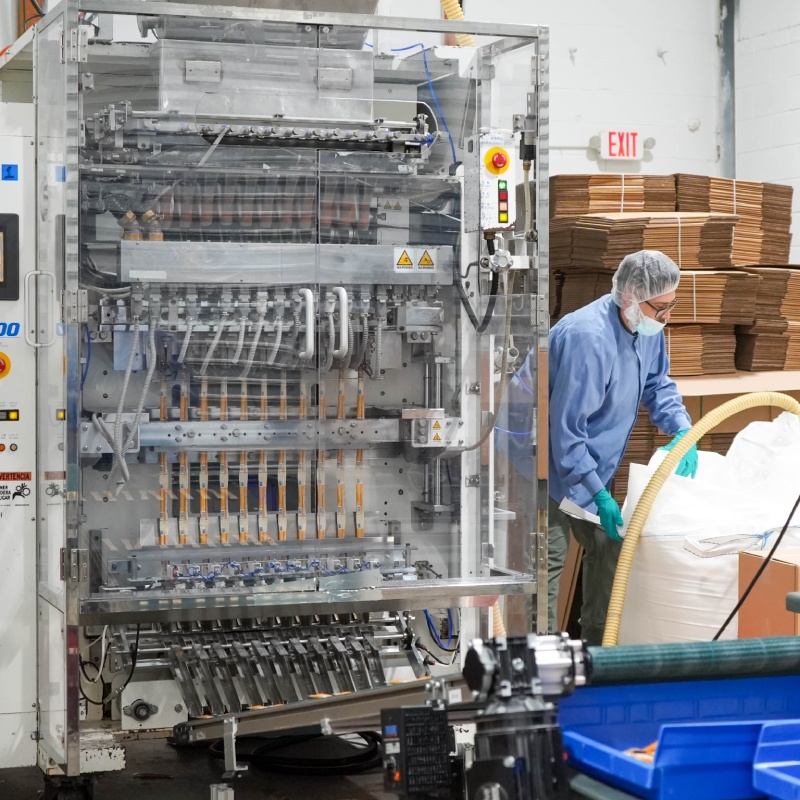
From a manufacturing standpoint, stick packs use continuous web-forming and high-speed filling equipment, which enables efficient production at scale. For the CPG brand, this means:
- Less packaging material per unit compared to bottles, jars, or even flat sachets.
- Compact product dimensions that minimize wasted space in secondary packaging.
- Strong barrier protection to maintain product freshness and compliance with shelf-life requirements.
These characteristics set the stage for significant savings in both shipping and storage.
Reduced Shipping Costs Through Lightweight Design
Freight carriers — whether parcel services like UPS/FedEx or freight haulers — price shipments based on either actual weight or dimensional weight, whichever is greater. Stick packs help on both fronts.
Lower Actual Weight
- A rigid plastic bottle might weigh 10–15 grams before the product is even added. A stick pack of the same product may weigh 2–3 grams.
- Across 100,000 units, the difference in packaging weight alone can remove hundreds of pounds from your total shipment weight.
Reduced Dimensional Weight Charges
- Because stick packs have a much smaller cubic footprint, they take up less space in cartons. This reduces the likelihood of triggering dimensional weight pricing for lighter products.
Transportation Efficiency
- Lower weight reduces fuel consumption per shipment, which not only cuts costs but can also improve your brand’s sustainability profile.
For CPG brands that ship high volumes, even a few cents saved per unit can translate into tens of thousands of dollars in annual savings.
Space Efficiency in Warehousing and Storage
Warehouse space is expensive, whether you operate your own facility or pay third-party logistics (3PL) storage fees. Stick pack packaging helps you store more product in the same footprint:
- Higher Product Density – Slim packaging means more units per case and more cases per pallet.
- Reduced Pallet Requirements – If you can fit 30% more product per pallet, you can store or ship the same amount with fewer pallets.
- Better Rack Utilization – Smaller cartons allow you to make better use of rack space, reducing wasted cubic footage.
This not only lowers direct storage costs but can also reduce handling time, since fewer pallets need to be moved for the same order volume.
Maximizing Container and Pallet Loads
The benefits of stick packs scale up quickly in full truckload (FTL) and container shipping.
- Truckload Efficiency – More product per pallet means more product per truckload, reducing the total number of loads you need to ship in a given period.
- International Shipping – For export, fitting additional product into the same container lowers per-unit landed cost, which is critical for competitive pricing in overseas markets.
- Order Consolidation – Higher product density allows you to combine multiple SKUs in the same shipment without exceeding pallet or container capacity.
For brands running regular distribution cycles, these efficiencies reduce transportation frequency, lower labor costs, and improve supply chain responsiveness.
Lower Packaging Material Costs
Because stick packs require less material to produce, they cost less per unit than rigid or semi-rigid alternatives in most cases. For a CPG business, this means:
- Lower Direct Packaging Cost – Less material purchased per unit lowers your bill of materials (BOM).
- Reduced Secondary Packaging Needs – Smaller primary packages mean smaller cartons, which also cost less to source and ship.
- Lower Disposal or Recycling Costs – If you’re paying by volume or weight for packaging waste disposal, using less material reduces that spend.
The reduced material usage also aligns with sustainability goals, which can strengthen retail partnerships and appeal to environmentally conscious consumers.
Transitioning to Stick Pack Packaging
Moving to a stick pack format requires evaluating a few key factors:
- Product Compatibility – Moisture sensitivity, particle size, viscosity, and fill weight all influence material selection and machine settings.
- Regulatory Compliance – Food, supplement, and pharmaceutical products may require specific barrier properties, labeling formats, and batch coding.
- Production Capabilities – Most CPG brands partner with an experienced copacker rather than invest in stick pack machinery themselves, especially in the early stages.
- Cost Analysis – A full cost-benefit review should factor in freight, storage, packaging materials, and any changes to fulfillment processes.
Working with a copacker experienced in high-speed stick pack filling allows for trial runs, quality control testing, and rapid scaling without significant capital investment.
CATEGORIES: Co-Packing, Stick Packs