Sampling isn’t just about giving something away for free – it’s a calculated marketing strategy. When done right, samples drive trial, boost brand recognition, and create a clear path to purchase. But the packaging you choose for your samples plays a big part in how effective that strategy is.
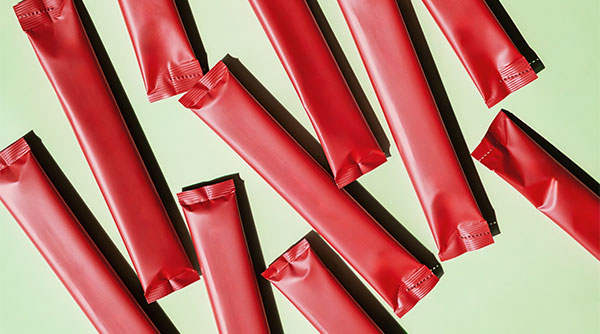
Stick packs have quietly become the preferred format for sampling across multiple industries, especially in food and beverage, health and wellness, and personal care. Their shape, material efficiency, and usability make them an ideal choice for both brands and consumers. Here’s why they work so well in the context of product sampling.
Keeps Costs Low Without Looking Cheap
Sampling budgets are tight by nature. You’re trying to reach thousands, sometimes millions of potential customers, with packaging that still reflects your brand well. Stick packs offer one of the best cost-to-quality ratios in single-serve formats.
They’re produced using vertical form-fill-seal equipment, which is built for speed and volume. The material footprint is minimal, usually a flexible film or laminate, which keeps costs low per unit. And because graphics are printed directly on the film, there’s no need for separate labeling or post-processing steps, which cuts down on both labor and production time.
This isn’t about cutting corners — it’s about scaling efficiently. Stick packs let you allocate more of your budget toward distribution and marketing, instead of blowing it all on packaging costs before the samples ever leave your facility.
Easy to Pack, Ship, and Carry
A good sampling strategy doesn’t end at the production line. You have to think about what happens after the sample is made: how it’s shipped, how it’s stored, how it’s distributed, and how a customer actually interacts with it.
Stick packs are incredibly space-efficient. Whether you’re sending 100 to a local event or 100,000 to a warehouse, they ship flat and require no special handling. Their shape also makes them ideal for slipping into mailers, magazines, influencer boxes, or even attached to shelf talkers in retail.
For consumers, the convenience factor is just as important. A sample that’s too bulky or fragile is more likely to get left behind or tossed. Stick packs are pocket-friendly, travel-friendly, and easy to stash in a purse, backpack, or glove compartment. That increases the odds of actual usage, which is the entire point of a sample.
Controlled, Clean Sampling
When someone tries your product for the first time, you want it to go smoothly. Stick packs deliver a clean, consistent user experience. They’re easy to open with a tear notch, don’t require scissors, and portion size is pre-measured, so there’s no second-guessing.
This is especially important for powders (like drink mixes or supplements), liquids (like flavored shots or skincare serums), and viscous products (like honey or condiments). With traditional sachets, you’re more likely to get spills, uneven doses, or awkward handling. Stick packs pour neatly, and that ease of use builds trust in your product and brand.
You’re not just sampling the product — you’re sampling the experience. And if the experience is frustrating or messy, that sticks with the customer just as much as the flavor or results.
Good-Looking and Brand-Friendly
One common concern with low-cost packaging is the risk of looking cheap. Stick packs avoid this. You can customize the film with full-color branding, ingredient lists, instructions, or promotional messages. That gives you a chance to make a real impression, not just throw your product in a blank foil wrapper.
Since you’re printing directly on the substrate, the design becomes part of the structure. No labels to misalign or fall off, no adhesive issues, and no risk of an unbranded pack showing up in a social media photo or influencer post.
For brands running coordinated sampling campaigns, this is critical. You get consistency, polish, and enough room to reinforce your messaging, even if the pack is only a few inches long.
Built for Conversion
Sampling without a follow-up plan is a wasted effort. The goal is to turn trial into a sale. Stick packs support that conversion in a few different ways.
First, they match the form factor many brands already use in their full-size product lines. That means when a customer decides to buy, they’re not switching to something unfamiliar. The same packaging they used for the sample is available in a box of 10, 20, or 30. That consistency makes the leap from sample to subscription or shelf purchase feel frictionless.
Second, stick packs allow for subtle marketing built right into the pack. You can include a QR code, short link, or even a “use code SAMPLE20” callout right on the packaging. This gives the recipient a direct path to buy, without needing to scan a flyer or hang onto a postcard.
And finally, because stick packs are easy to carry and resealable if needed, customers often use them in a real-world setting — at the gym, on a hike, at work. That type of trial, in context, tends to generate more honest reactions and better word-of-mouth.
CATEGORIES: Stick Packs